
Push notifications
On devices without native push technology from the manufacturer or carrier, the XOne platform installs its own listening service over an IP connection.
A system for placing listening services on devices.
On devices that do not support native push technology from the manufacturer or network carrier, the XOne platform installs its own listening service over an IP connection.
It sends data to devices through server-initiated events.
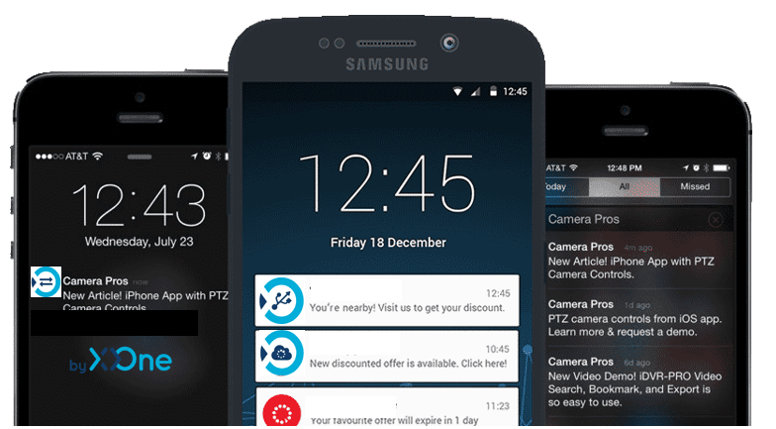
Alarm server
Alarm servers receive alarms from various sources, generally external apps responsible for monitoring hardware, querying databases or receiving information from various external sources.
These events can come in many formats, so the alarm server’s first job is to convert the information into a common, normalized format and then place it in send queues.
To translate external information, alarm servers use a mechanism of connectors that can be installed or uninstalled depending on the system’s processing needs. Several standard alarm protocols are recognized, such as SMPP, and several proprietary protocols from different production control systems are also supported.
Event server
Event servers operate similarly to alarm servers, with the difference that each of them is designed to process a very specific event or set of events.
They work independently, as they are designed to communicate with a different push client.
Replication server
The replication server is not a separate component of the push system; rather, it benefits from push technology to notify clients that there is data pending download.
If the replication server in use is an older version that does not support push, the event server can be used and programmed to check the replication databases and notify clients.
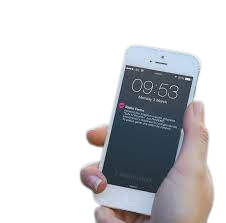
On devices that support native push, XOne uses it to send the data.
Among the XOne solutions that can use this system, we highlight solutions for sending alarms to mobile terminals, real-time process management, field service (SAT) and maintenance services…
In addition, it can make requests by sending the push token corresponding to the device, so that external web services can send messages that can be handled with the XOne framework.