
Intelligent communications system
XOne's machine learning-based communications system lets mobile apps work independently of the availability of communication links.
The XOne communications system, based on Machine Learning, allows mobile apps to work regardless of whether communication links are available.
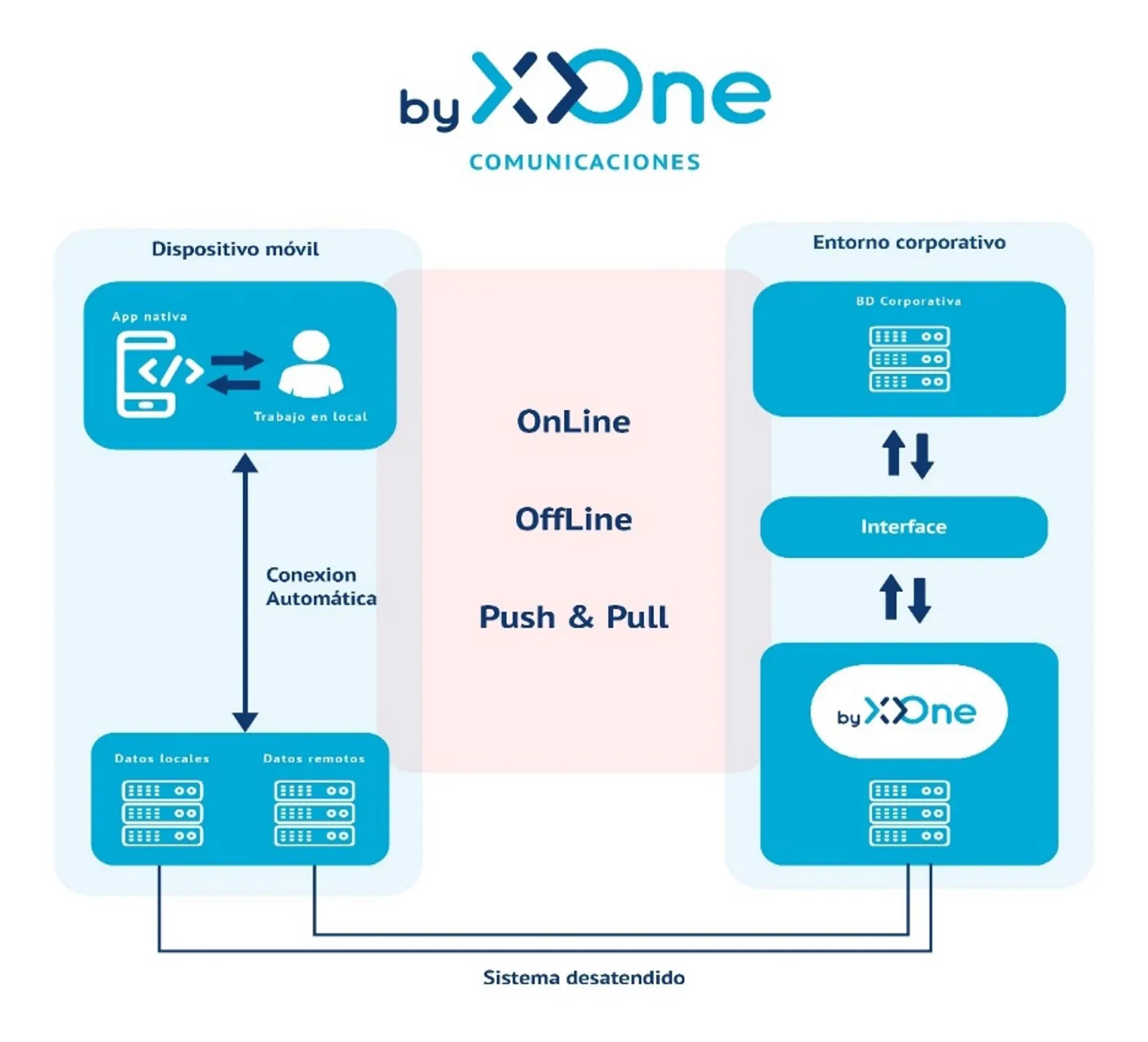
One of XOne’s most important features
One of the main needs of a mobility system is communication with headquarters, since the data entered on the devices has to be incorporated into the management systems.
Likewise, the devices must receive data from headquarters, so that mobile operators stay up to date.
Without data transmission, mobility apps would make little sense in enterprise systems.
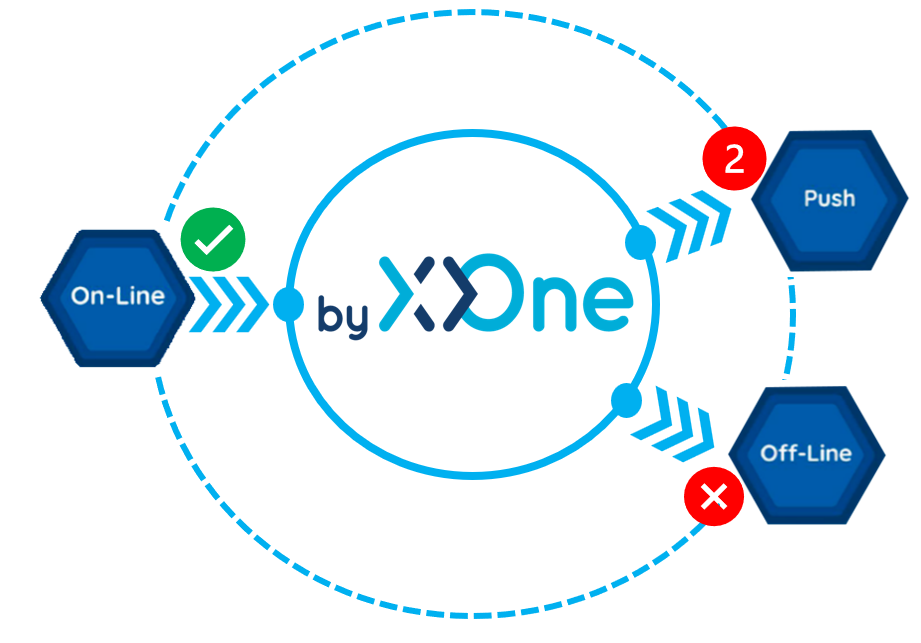
- Online
- Offline
- Push
Intelligent communications
XOne has a robust communication system based on Machine Learning that can predict and anticipate user needs.
Offline-online operation with no extra code from the developer
Intelligent communications enable automatic switching between networks, as well as variable block sizes depending on the network.
Work offline
Apps can keep running with local copies of the data, so users can continue working even when there is no connection.
The XOne replication system allows communication to take place asynchronously, securely and unattended.
When there is a connection, replication sends and receives data.
When there is none, replication looks for ways to connect in order to communicate with headquarters.
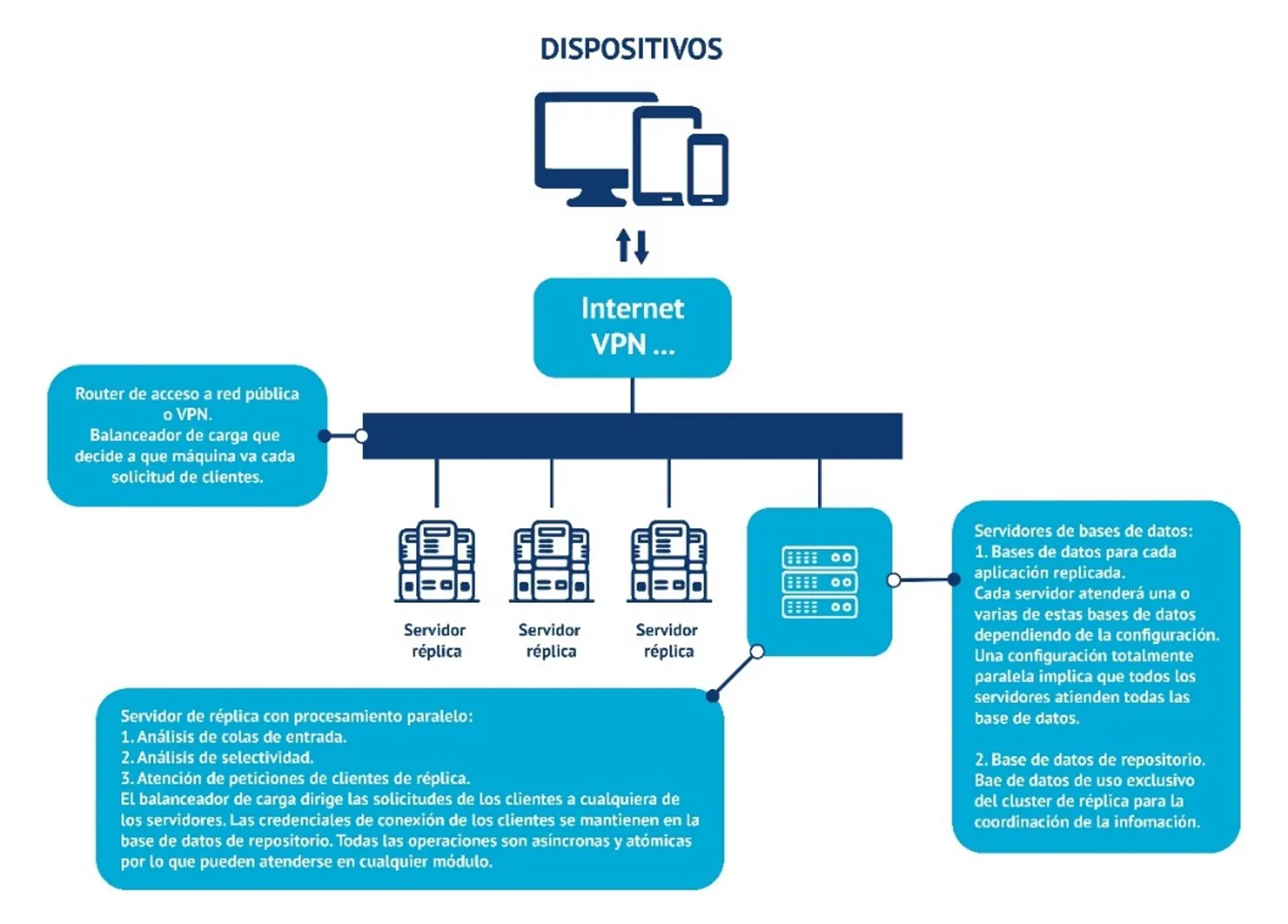
XOne mobilizes different apps within the same company using the same replication server.
It interconnects the various devices used in a project (Android, iPhone, PC, Windows Mobile…), transparently maintaining the referential integrity of all data.
XOne also supports document replication, that is, the transfer of files and images. This mechanism allows certain database fields to be used as references to files that will be transmitted between client and server.
Replication server tasks
Accepting client requests
Client requests are commands for sending and receiving data, configuration and administration, etc. The commands are received via TCP/IP.
Managing client selectivity
Selectivity tables contain the rules that operations must meet in order to go to each client of each database.
Data interconnection
It interconnects the different database systems installed on the replication server or client, depending on the device being used.
Data processing
It processes the data sent by clients in order to insert it into the various databases.