
User experience (UX)
XOne leverages new UX trends and adopts processes that foster a more innovative approach to user experience design.
Extreme productivity with high-control UX development tools. Achieve an optimal experience across all channels.
Our challenge: delivering the best user experience
XOne continuously evolves and researches how to drive innovation and business transformation for its customers and users. To that end, it leverages new UX trends and adopts processes that foster a more innovative approach to user experience design, making the most of new technologies and assessing each trend and its potential impact on the business.
Our expertise in this field is based on designing and developing smooth, simple experiences across applications, digital touchpoints and interaction modes.
XOne uses technologies such as:
- Interaction with IoT nodes based on Android, Tizen or iOS
- Prediction systems based on Machine Learning
- Augmented reality
- Voice guidance
- Chat and voice virtual assistants
- Augmented programming
- Facial recognition
- Preventive monitoring of biometric variables, capable of detecting parameters with various biological, physical… information
It thus offers customers a wide variety of use cases for any type of company, especially in the healthcare, education, sales, logistics and insurance industries…
Delivering an optimal user experience is essential for any sector, especially where instructions must be given to complete a specific action, guide the user within a system, carry out training and learning activities, or interact with the environment in real time.
Take a look at XOne UX
XOne can also create apps based on dialogs and NLP, both for working within the app itself and for integration with external systems such as LUIS, Alexa or Google.
The native mobile apps offered by XOne are low-code, and in some cases no-code, and can work online and offline automatically and transparently to the user, with continuous learning for decision-making.
In addition, XOne offers XOneUXDesign, a UX design and wireframing tool for developing the visual interface.
Starting from predesigned XOne templates, users can create entities and add visual components from different toolboxes. The result can be seen in real time in the IDE and on the devices. Users can also wireframe entities from the same platform.
XOne offers a new way to test the UX instantly on up to 20 devices with different screens at the same time. This feature, called “Hot Swap,” lets you see changes in real time from the development IDE on physical devices or emulators linked to the project.

Augmented reality will significantly boost the customer experience
The impact of this technology can be transformative for businesses. That is why, in terms of AR, XOne supports ARKit (iOS) and ARCore (Android) to enhance the AR experience on devices, making it increasingly robust and adding new capabilities such as environment tracking, distance measurement and light estimation without the need for additional sensors.
Thanks to its unique programming language, AR apps can be created quickly and easily in any of the entities created by the developer, using multiple pretrained models. It also makes it possible to train new models on the XOne neural network.
A new way to interact with the environment in real time
The platform makes it possible to create applications using AR, based on the same code already written for other features or by creating new code specifically for immersion in work or recreational environments.
AR improves the understanding of information and makes it possible to overlay interactive virtual elements on the real world around us, using our mobile devices.
XOne uses it for different uses and features, such as identifying objects in the field and providing information about them, reporting potential faults, remote support tasks or the real-time display of immersive videos.

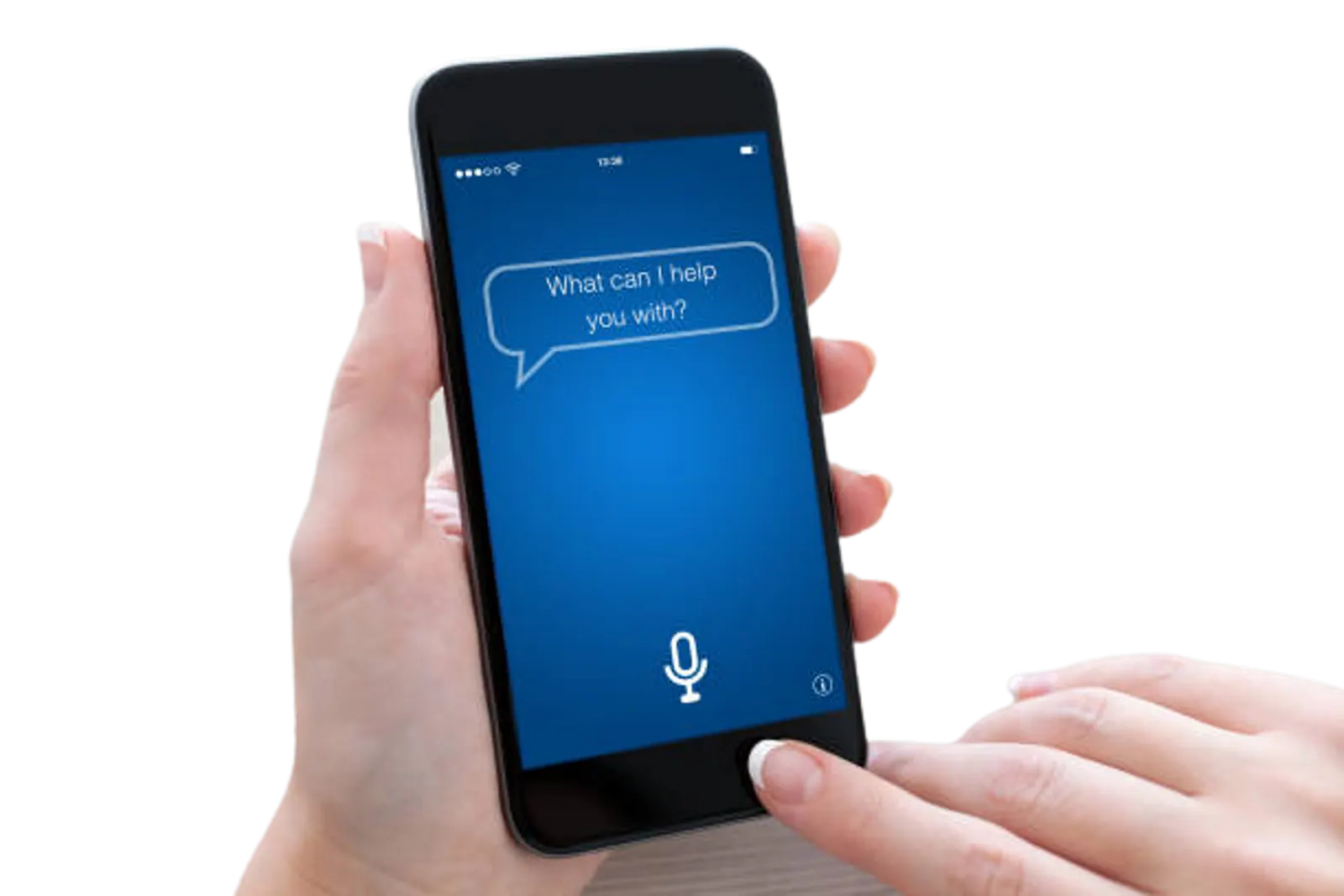
Voice and gesture interaction
Hands-free enabled.
XOne’s great potential also makes it possible to develop hands-free apps, with interaction with the created entities through voice or gestures, not just through common events.
The ability to create and train new chat models, with utterance declarations to identify NLP interactions and associate them with any logic developed for general or specific purposes, makes it possible to interact with the application without having to use your hands.