
Security in XOne apps
At XOne we focus on protecting all our processes to keep users, customers and employees safe with end-to-end security.
End-to-end security
At XOne we focus on protecting all our processes in order to protect our users and customers and, in the case of corporate apps, employees.
The security systems implemented by XOne make the entire system and its processes more effective and efficient.
They also ensure that the company knows the types of risks it faces and provide enough information to make the best decisions when facing potential security challenges.
XOne incorporates predictive and prescriptive analytics. Security of the platform and all its apps is a priority, providing complete security throughout the entire process as well as secure information transfer.
DMZ security broker
This is a protection system against web-based attacks that achieves separation of all communications between the head office and the devices.
The system is designed to deploy as many brokers as deemed necessary.
The objectives of the XOne broker are:
- Preventing identity spoofing.
- Preventing denial-of-service attacks.
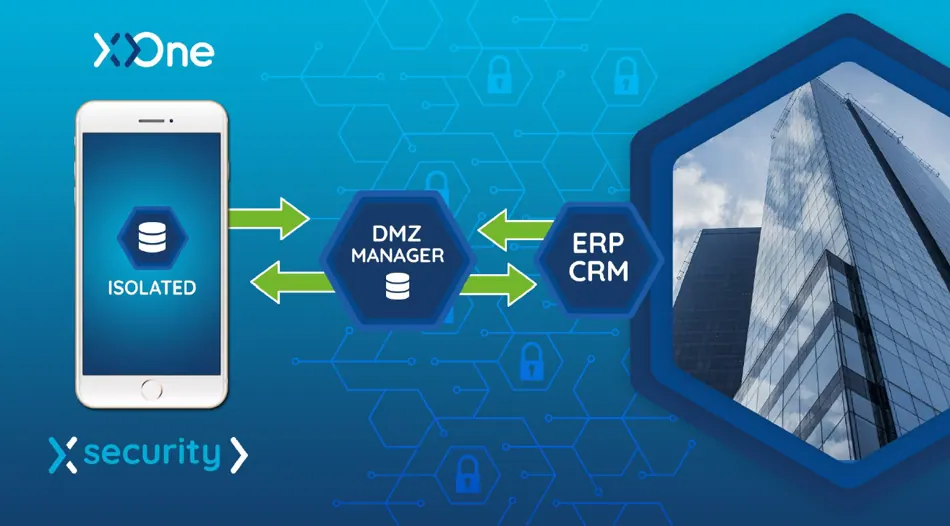
Web communications are only enabled over the SSL protocol, so these communications are already encrypted over SSL.
The communications used in this environment, even with the intermediate broker, are quite agile and improve performance.
IDS Core
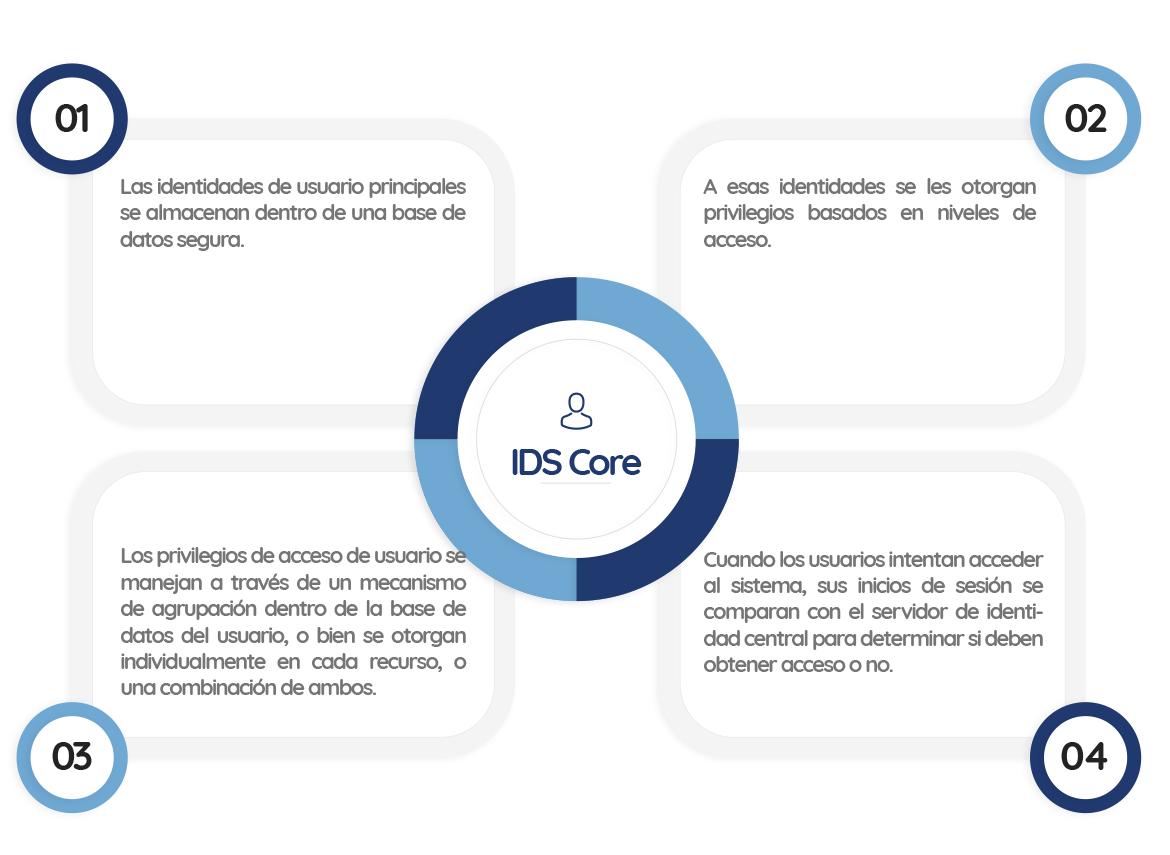
IDS Core is the core of any access and identity control infrastructure. It identifies the user and manages which resources they can access.
It provides a stable identity for users across all the applications in our system.
Full interconnectivity
XOne offers a very comprehensive IDS Core solution to manage identities across different platforms, systems and services.
It is a system responsible for authenticating, authorizing and securing both apps and users in our developments.
IDS Core can connect and manage a multitude of identities across different applications, APIs, clouds, mobile devices, IoT…
It implements common protocols, keeps apps secure and follows security and control standards, so that the usability of our apps is not affected.
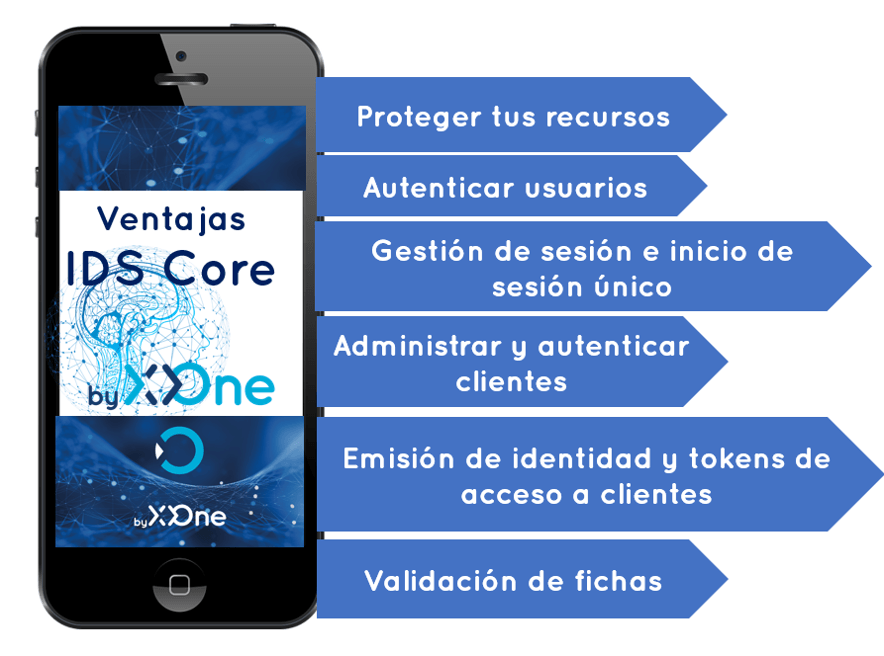
Secure your apps with IDS Core
Outsourcing core security functions to a security token service avoids duplicating functionality across applications and endpoints.

Authentication
Authentication is required when an application needs to know the identity of the current user. Typically, these applications manage data on behalf of that user and must ensure that the user can only access the data they are authorized to access.
The most common authentication protocols are SAML2p, WS-Federation and OpenID Connect.
API access
Applications have two fundamental ways of communicating with APIs: using the application’s identity or delegating the user’s identity. Sometimes both methods are combined.
Touch ID
A fingerprint recognition system whose main function is unlocking apps and devices, and which constitutes a secure authentication method.
It compares fingerprints and detects whether or not the user is identified.
In addition, this functionality can be linked to the digital signing of documents and can grant or deny permissions to perform certain actions that require a high level of identity authentication, such as deleting information, accessing payments…
Face ID
This solution, like the previous one, allows devices and apps to be unlocked securely thanks to a facial recognition sensor.
It is a very useful feature not only for granting permissions to users, but it can also be used in low-light areas.
Anti-fraud
This security module is an automatic document capture and recognition solution designed to identify and detect fraud in DNI (Spanish national ID cards) and passports.
It can detect whether a document is an original or a copy by means of infrared light control and comparison with the biometric data stored in the documents.
Advanced anti-fraud (DNI 3.0)
A solution for user authentication through the DNI on devices with NFC technology.
Simply by bringing the reader very close, a data exchange is established that is faster and has greater capacity than other systems.
Very useful for identification, obtaining information, authorizations, procedures…
Data Loss Prevention
The data loss prevention module is a security tool that makes it possible to anticipate, prevent and mitigate the potential loss of transferred information.
It inspects and controls the transfer of files containing confidential or sensitive information, with the aim of protecting them and ensuring a reliable and secure working environment through cross-platform encryption designed to protect data both locally and in the cloud.
Security Monitor
XOne provides constant monitoring to generate custom reports with relevant real-time data for decision-making and troubleshooting.
It monitors security events and device usage in real time, by individual, department, role, project…
Real-time monitoring and analysis help preserve the security of mobile data, as well as detect threats, incidents or unusual behavior, such as large data transfers, downloads of confidential files…
Security Warning
This advanced security module is a proactive incident detection solution that allows you to configure automatic responses and alerts for security threats, excessive data usage or hardware failures.
It automatically detects any threat that may occur, such as network attacks, attempts to eavesdrop on data traffic, phishing or malicious sites…
Secure payments
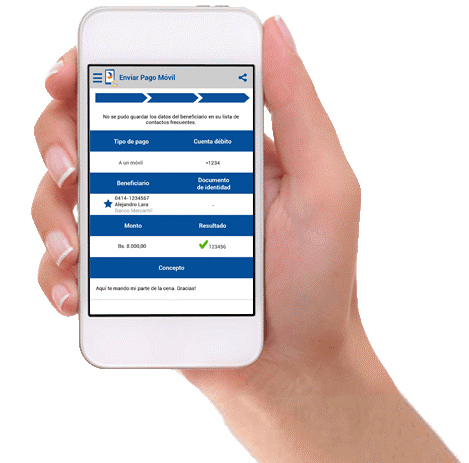
XOne has a highly advanced and secure tool for handling operations, data and payment management to carry out all types of transactions through 100% customizable payment gateways.
It ensures data confidentiality and protection, encrypting sensitive information and guaranteeing that it is transferred immediately, securely and easily.
It follows SSL security protocols, address verification systems (AVS) and all current security regulations.
XOne certifies several payment devices, such as Itos Technology or Ingenico (AXIS).
PSD2, two-factor authentication
Payment Services Directive 2 (PSD2) is a European regulation for electronic payment services.
XOne integrates this strong authentication system in order to increase transaction security and prevent online fraud, using two-factor authentication in banking operations.
Two-factor authentication is performed by sending SMS messages that are used to verify the user’s identity and authorize transactions.
Advanced signatures
XOne module for incorporating advanced biometric and digital signatures on devices.
The digital signature mechanism authenticates that any of the data contained in a document is exactly what was entered by the user, and stores data such as the date and time the process was carried out, the user who performed it and the certificate used.
It can be a simple signature or a signature with an X.509 certificate.
Biometric signature
The XOne biometric signature mechanism allows legally binding documents to be signed using a handwritten signature captured by digital devices.
Developed for the leading platforms: Android, iOS and Windows.
With XOne no data connectivity is required: the entire signing process takes place on the device.
It allows adding a timestamp and coordinates.